If you’ve been dealing with nagging pain — whether it’s a stiff lower back, a cranky knee, or that shoulder thing that just won’t quit — you’ve probably wondered which LifeWave patch for pain actually works best. I get it. There are a bunch of different patches out there, and figuring out where to start can feel overwhelming. I’ve spent a good chunk of time talking to people who use these patches daily, and I want to break it all down for you in plain English.
Look, I’m not going to pretend patches are some kind of miracle cure. But I’ve seen enough people get real relief that it’s worth taking a serious look at what’s available. So let’s dig into which LifeWave patch for pain makes sense depending on your situation.
The Big Three: LifeWave Patches That Target Pain
When it comes to pain management with LifeWave, three patches come up again and again in conversations: IceWave, X39, and Aeon. Each one works a little differently, and honestly, which one you pick depends a lot on what kind of pain you’re dealing with.
IceWave — The Go-To for Localized Pain
IceWave is the patch most people reach for first when they’re hurting, and for good reason. It’s designed specifically for localized pain relief. The way it works is pretty straightforward — you use two patches placed around the area where the pain is. One goes on each side of the pain point, and users report feeling relief sometimes within minutes.

My neighbor Dave started using IceWave patches on his bad knee after a hiking trip last October. He’d been popping ibuprofen like candy for about two weeks and was getting nowhere. He told me he was skeptical at first — his exact words were “this sounds like something my weird aunt would try” — but after about 45 minutes with the patches on, he said the throbbing dialed down noticeably. Within a few days of consistent use, he was walking his dog again without wincing on every step.
Here’s the thing about IceWave placement that trips people up: you don’t slap both patches right on top of the sore spot. You place one patch on each side of the pain area — think of it like bracketing the pain between the two patches. For knee pain, one goes on the inside of the knee and one on the outside. For lower back pain, one on each side of the spine where it hurts.
X39 — Cellular Repair and Recovery
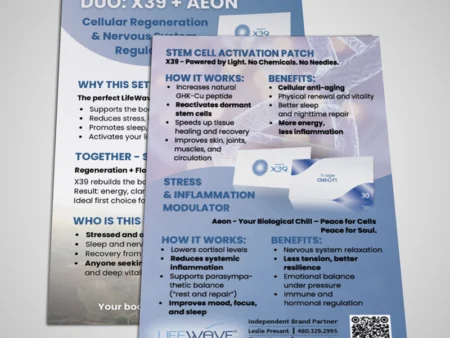
X39 is kind of the heavy hitter in the LifeWave lineup. It’s not specifically a pain patch — it’s more of a whole-body support patch that activates GHK-Cu, a copper peptide that’s involved in stem cell activity. But here’s why it matters for pain: a lot of chronic pain comes from tissue that isn’t healing properly. When your cells are doing their repair job better, pain tends to decrease over time.
I’ve seen users report that X39 doesn’t give you that immediate “ahh” feeling the way IceWave does. It’s more of a slow burn — you use it consistently for about 3-4 weeks before noticing that your pain levels have dropped and you’re recovering faster from physical activity. A woman in my local running group, Sarah, combined X39 with her physical therapy for a rotator cuff issue. She said by week six, her PT was surprised at how much better her range of motion was getting.
For X39 placement, the most common spot is behind the neck, below the base of the skull, or on the lower abdomen about two inches below the belly button. Some folks alternate day to day.
Aeon — When Pain Is Tied to Stress
This one surprised me, honestly. Aeon is primarily known as an anti-stress patch — it supports the parasympathetic nervous system, which is your body’s “rest and repair” mode. But think about it: how much of your pain gets worse when you’re stressed? Tension headaches, tight shoulders, jaw clenching, lower back tightness — stress amplifies all of it.
Aeon helps your body shift out of that fight-or-flight state, which can take the edge off stress-related pain. It’s not going to help much if you’ve got a sprained ankle, but for the kind of chronic tension pain that builds up from sitting at a desk or dealing with life’s nonsense? It’s worth trying. Place it on the back of the neck or the third eye point (center of forehead, between your eyebrows).
IceWave Placement Guide: Getting It Right
Since IceWave is the primary patch people use when asking which LifeWave patch for pain to try first, let me give you a more detailed placement guide. Getting placement right makes a real difference.
- Knee pain: One patch on the inner knee, one on the outer knee, level with the pain point
- Lower back pain: One patch on each side of the spine, at the level where you feel the pain
- Shoulder pain: One patch on the front of the shoulder, one on the back, at the same height
- Neck pain: One patch on each side of the neck, roughly where the tension sits
- Wrist/hand pain: One patch on top of the wrist, one on the underside
Pro tip from experience: if you’re not sure exactly where the pain center is, try pressing around the area gently. Where it’s most tender? That’s your center point. Place one patch about 2-3 inches on either side of that.
Comparing LifeWave Patches for Different Types of Pain
Not all pain is created equal, so here’s a quick breakdown of which patch tends to work best for what:
Acute/localized pain (sprains, strains, joint pain): IceWave is your best bet. Fast-acting, targeted, and most users notice something within the first hour.
Chronic pain (ongoing back issues, arthritis-type discomfort, old injuries): X39 for the long game, combined with IceWave for day-to-day relief. This combo is probably the most popular among long-term patch users I’ve talked to.
Stress-related pain (tension headaches, tight muscles from anxiety, TMJ): Aeon first, possibly combined with IceWave on the specific trouble spots.
Post-workout soreness: X39 for recovery, IceWave on the sorest spots. A buddy of mine who does CrossFit swears by this combo — he says his recovery time between heavy sessions dropped from about 48 hours to closer to 24-30 hours after a few weeks of consistent use.
How Long Before You Feel Results?
This is the question everyone asks, and I wish I could give a clean, simple answer. But bodies are weird, and everyone responds differently. Here’s what I’ve gathered from talking to a lot of people:
- IceWave: Many users report feeling some relief within 15-60 minutes. It’s not always dramatic, but it’s often noticeable. Some people feel it in under 10 minutes — my friend Tara says she can literally feel the shift happening in her lower back about 20 minutes after placing the patches.
- X39: This is a longer play. Give it 2-4 weeks of daily use. Some people notice energy improvements first, and the pain reduction comes a bit later. By week 6-8, most consistent users report meaningful differences.
- Aeon: Stress relief often kicks in within a day or two. The pain relief that comes from reduced stress takes about 1-2 weeks to really show up consistently.
One thing I always tell people: give it a fair shot. Don’t try a patch once for two hours and declare it doesn’t work. Use it daily for at least a week before making judgments. Your body needs time to respond.
Stacking Patches: Can You Use More Than One?
Yes, absolutely. In fact, a lot of experienced users stack patches for better results. The most common pain-focused stack is IceWave plus X39. You use IceWave directly around the pain area for immediate relief, and X39 on one of its standard spots (back of neck or lower abdomen) for ongoing cellular support.
Some people also add Aeon to the mix, especially if their pain gets worse with stress. That’s a three-patch approach, and while it’s more of an investment, the people who do it tend to be really happy with the results. Just don’t go overboard — more isn’t always better. Start with one type, see how your body responds, and add from there.
Real Talk: What Patches Won’t Do
I want to be straight with you. LifeWave patches are not a replacement for medical treatment. If you’ve got a fracture, a torn ligament, or something that needs surgery, patches aren’t going to fix that. They can potentially support recovery alongside proper medical care, but they’re not a substitute.
Also, results vary. I know people who absolutely swear by these patches, and I know a couple who tried them and didn’t notice much. Bodies are different. What works amazingly for your coworker might take longer for you, or you might need a different patch entirely.
For more information about LifeWave products, check out other articles on budgetprintonline.com where we cover different patch applications and tips.
Frequently Asked Questions
Which LifeWave patch for pain is best for beginners?
IceWave is the best starting point for most people. It’s specifically designed for pain relief, it’s easy to use with clear placement guidelines, and most users feel something within the first session. If you’re brand new to LifeWave patches, start here.
Can I wear LifeWave patches while sleeping?
Yes, many users wear their patches overnight. In fact, for chronic pain, wearing patches while you sleep can support your body’s natural repair processes. Just make sure they’re secured well so they don’t peel off during the night — some people use a bit of medical tape over the edges.
How often should I replace the patches?
LifeWave patches are designed for single-day use. Most people apply a fresh set each morning. Using a patch beyond 12-24 hours isn’t recommended since effectiveness diminishes after that window.
Are there any side effects from using LifeWave patches for pain?
LifeWave patches are non-transdermal, meaning nothing enters your body through the skin. Most people don’t experience side effects. Occasionally, someone might get mild skin irritation from the adhesive — if that happens, try moving the patch to a slightly different spot next time. Some users report a temporary detox-like feeling in the first few days of using X39, which usually passes quickly.
Can I use IceWave patches along with my regular pain medication?
Since the patches don’t introduce any chemicals into your body, they’re generally fine to use alongside medication. That said, always check with your doctor or healthcare provider before combining any treatments, especially if you’re on prescription pain medication.